Why Small Business Marketing Fails Before Ads Begin
Why small business marketing fails often starts with unresolved questions about the customer, the problem, and the message.
Why small business marketing fails often starts with unresolved questions about the customer, the problem, and the message.
Most small business marketing does not fail because the business owner is lazy. It fails because the business starts spending money before the strategy is clear.

Park City Live Event
Market Faster: The AI Mastermind
An invite-only live experience for Utah founders at the Park City Marriott. Strategy, AI, and the room you've been looking for.
Reserve Your SeatA business will often run Facebook ads, boost posts, rebuild a website, print flyers, start posting on social media, or hire someone to "do marketing" before answering the most important questions.
- Who are we trying to reach?
- What problem are we solving?
- Why should they trust us?
- What do we want them to do next?
- What happens after they raise their hand?
When those answers are unclear, marketing becomes expensive noise. The business may get attention, clicks, views, or even traffic, but none of it turns into consistent leads, appointments, sales, or revenue. That is why most marketing fails before the first ad ever runs.

Mindset Marketing Academy
02 / 05Stop Guessing. Start Marketing From Truth.
Most businesses market from opinion. The Source of Truth replaces guesswork with a documented, AI-ready strategy.
To apply this guidance on why small business marketing fails, explore digital marketing strategy Utah.
The Real Problem Is Not Traffic
A lot of business owners believe they have a visibility problem. They say things like, we need more people to know about us, we need more traffic, we need to post more, we need better ads. Sometimes that is true. But many businesses do not have a traffic problem. They have a clarity problem.

Market Faster Methodology
The Build · 30-Day Marketing Infrastructure
Brand, website, funnels, automation, CRM, and AI voice receptionist installed in 30 days. Source of Truth included. Only 12 Utah businesses every 6 weeks.
See What's Built- If the offer is confusing, more traffic will not fix it.
- If the website does not explain the value quickly, more visitors will not fix it.
- If the call to action is weak, more clicks will not fix it.
- If there is no follow-up system, more leads will not fix it.
Traffic only helps when the business is ready to convert attention into action.
The Four Questions Every Business Must Answer First
1. Who is the exact buyer?
A business cannot market effectively to everyone. A custom home builder is not selling to every homeowner. A luxury med spa is not selling to every person who wants skincare. A business coach is not selling to every entrepreneur. The message changes when the buyer is specific.
- Age range
- Location
- Income level
- Stage of life
- Current problem
- Desired outcome
- Buying motivation
- Fear or hesitation
- Reason they would choose you instead of someone else
2. What problem are they trying to solve?
People do not buy because a business exists. They buy because they have a problem, desire, fear, pressure, opportunity, or goal. A business owner may think they are selling a service. The customer is usually buying an outcome.
A website designer may think they sell websites. The customer wants more trust, more leads, more clarity, and a better first impression. A coach may think they sell coaching. The customer wants confidence, direction, accountability, and a better result. A builder may think they sell construction. The customer wants peace of mind, quality, status, comfort, and trust.
To connect these ideas with implementation support, see digital marketing strategy Utah.
3. Why should they believe you?
Trust is the bridge between attention and action. Most businesses do not use enough proof in their marketing.
- Testimonials
- Case studies
- Before and after examples
- Photos and videos
- Client stories
- Years of experience and specific results
- Media features
- Community involvement and awards
- Process explanations and frequently asked questions
A business does not need to brag. It needs to reduce doubt. The more expensive or personal the decision, the more proof is required.
4. What should they do next?
Many businesses lose leads because the next step is unclear. A website may say Contact Us but not explain why. A social post may get attention but not ask for action. An ad may create interest but send people to a weak page. A strong call to action should be specific.
- Schedule a free consultation
- Reserve your spot
- Request a project review
- Apply for a business spotlight
- Download the checklist
- Book a 15-minute overview
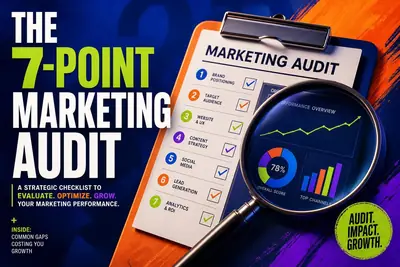
- Get your marketing audit
The Marketing Breakdown
If your marketing is not producing results, look at the system in this order. Step one, clarify the offer. Can someone understand what you do in five seconds, who it is for, why it matters, and what happens next? If not, your offer needs work before your ads do.
Step two, improve the message. Your message should speak to the buyer's problem and desired outcome. Weak: "We offer professional business consulting services." Stronger: "We help Utah business owners find the leaks in their marketing and build a clear path to more leads, better follow-up, and higher conversions."
Step three, fix the landing page. A landing page should not simply describe the business. It should guide the visitor toward a decision with a clear headline, specific subheadline, problem statement, trust proof, offer explanation, simple process, strong call to action, FAQ section, and contact option.
Step four, build the follow-up. The money is often in the follow-up. A lead should immediately receive confirmation, a helpful next step, text or email follow-up, a reminder, personal outreach, additional proof, and a clear invitation to act.
Common Mistakes That Make Marketing Fail
- Running ads to a weak website, paid traffic only exposes the weakness faster.
- Posting without a strategy, random posting may keep the page active but rarely creates predictable growth.
- Talking too much about the company, the customer cares about their problem first.
- Using vague calls to action, Learn More is not always strong enough.
- Not tracking leads, if a business does not know where leads come from it cannot make smart marketing decisions.
Example for a Utah Business
Imagine a Utah home service company wants more booked consultations. They start by boosting social media posts. The posts get likes but no appointments. The issue may not be the ad. The issue may be that the business has not clearly explained what problem they solve, why their service is better, what the process looks like, what proof they have, how to schedule, and what happens after the form is submitted. Once those pieces are fixed, the same ad budget can produce a better result.
The Bottom Line
Marketing should not begin with the question, where should we advertise. It should begin with the question, are we ready to convert attention into action. Before running the next ad, every business should check the foundation, buyer, problem, offer, message, proof, landing page, call to action, and follow-up. When those pieces are clear, marketing becomes easier to measure, easier to improve, and easier to scale.
Why do small business marketing campaigns fail?
Most small business marketing campaigns fail because the business spends money before the offer, message, audience, landing page, and follow-up process are clear.
Should I run ads before fixing my website?
Usually, no. If your website does not clearly explain your offer and move visitors toward action, paid ads may waste money.
What should a business fix before advertising?
A business should clarify the buyer, offer, message, proof, landing page, call to action, and follow-up system before increasing ad spend.
Is social media enough for small business marketing?
Social media can help, but it works best when connected to a larger system that includes a website, lead capture, follow-up, and conversion strategy.
Need help finding the leaks in your marketing? The INCubator helps Utah businesses build clearer offers, better funnels, stronger content, and smarter follow-up systems. Start with a Business Marketing Breakdown and see what needs to change before you spend more money on ads.
Frequently Asked Questions
Why can small business marketing fail before ads are launched?
Most small business marketing does not fail because the business owner is lazy. It fails because the business starts spending money before the strategy is clear. A business will often run Facebook ads, boost posts, rebuild a website, print flyers, start posting on social media, or hire someone to "do marketing" before answering the most important questions.
How do I identify the customer problem my marketing should address?
People do not buy because a business exists. They buy because they have a problem, desire, fear, pressure, opportunity, or goal. A business owner may think they are selling a service. The customer is usually buying an outcome. A website designer may think they sell websites.
Where does small business marketing break down?
If your marketing is not producing results, look at the system in this order. Step one, clarify the offer. Can someone understand what you do in five seconds, who it is for, why it matters, and what happens next? If not, your offer needs work before your ads do.
What should I clarify before spending more on marketing?
Marketing should not begin with the question, where should we advertise. It should begin with the question, are we ready to convert attention into action. Before running the next ad, every business should check the foundation, buyer, problem, offer, message, proof, landing page, call to action, and follow-up.
Related Guest Conversations
Peter Anthony
Founder, The INCubator AI Marketing Agency
Helping Utah businesses grow through strategic marketing and authentic storytelling.
Free Live Event
The Founders Series
Five free AI marketing nights in Draper, presented by MindsetMarketing.Academy and powered by the INCubator.
Oct 20 – Dec 15, 2026 · Doors 6:45 PM · Presentation 7:00–8:30 PM · Q&A until 9:00 PM
Register for Free