Most referral marketing examples you'll find online are from software companies with a million users. This one is from a single franchise location in Utah with no customer list, no real ad budget and a brand name that came with baggage. In under 90 days it had over 2,000 local customers opted in to texts, for under $1,500 in ads. Here is exactly how the referral game worked, step by step, so you can copy the mechanics for your own business.
Why ads were the wrong tool for this franchise
Franchise local marketing has a built-in problem. The franchisor runs national ads, every other location in the state runs the same local ads, and the owner ends up bidding against their own brand for attention. Every dollar spent that way rents a customer. Nothing is kept.
This owner needed something different: customers who were theirs. A list the location controlled, that the franchise couldn't take back, that didn't disappear when the ad budget ran out.
So we didn't build a campaign. We built a game.
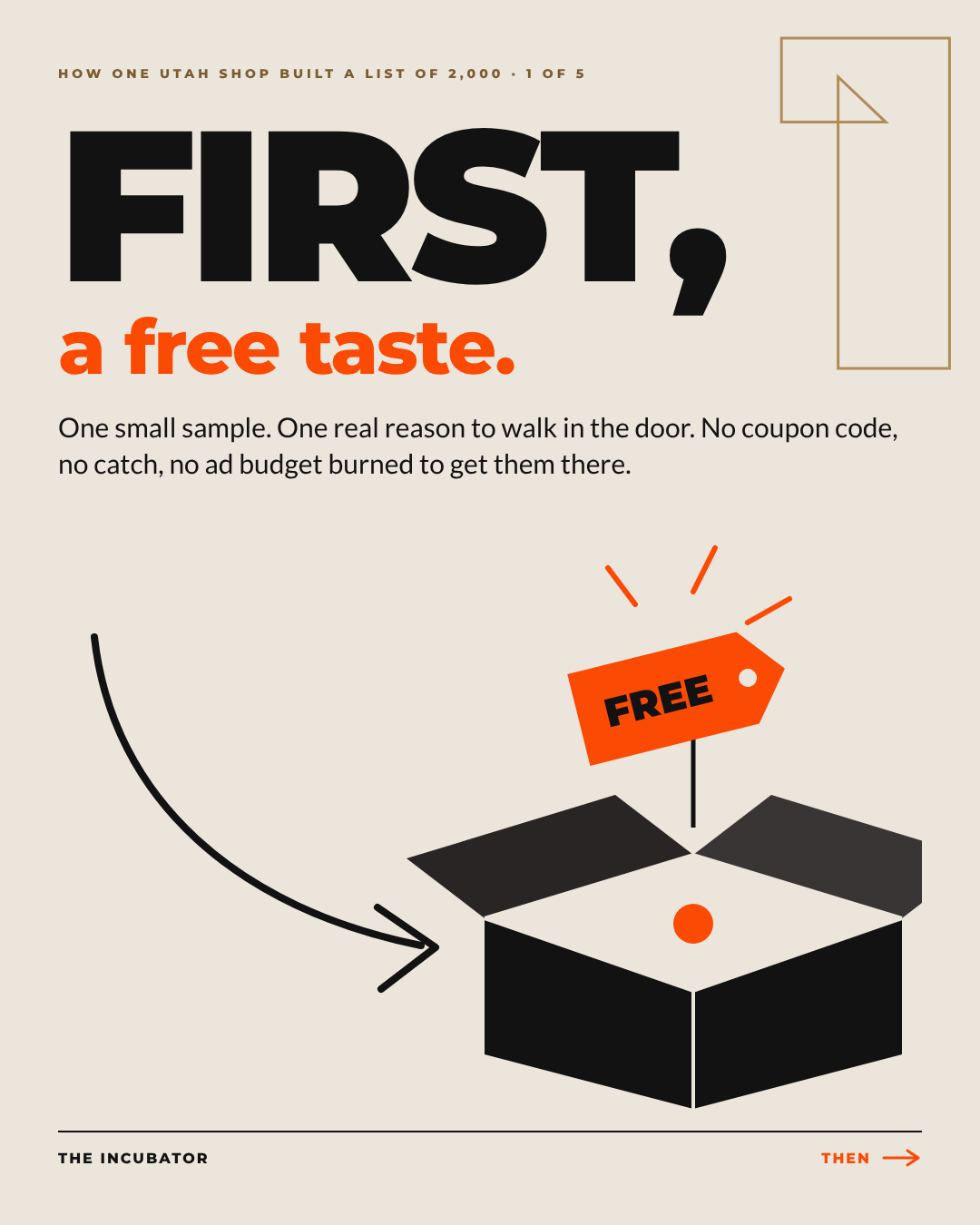
First, a free taste got people in the door
The entry point was a small free sample of the product. Not a coupon, not a percent off, not "buy one get one." A free taste, no strings.
Why this works: a coupon asks the customer to spend. A sample asks them to try. For a local business with a product people can taste, hold or test in two minutes, the sample is the cheapest trust you will ever buy. The entire ad spend for the project, under $1,500, went to putting that offer in front of locals on Facebook.
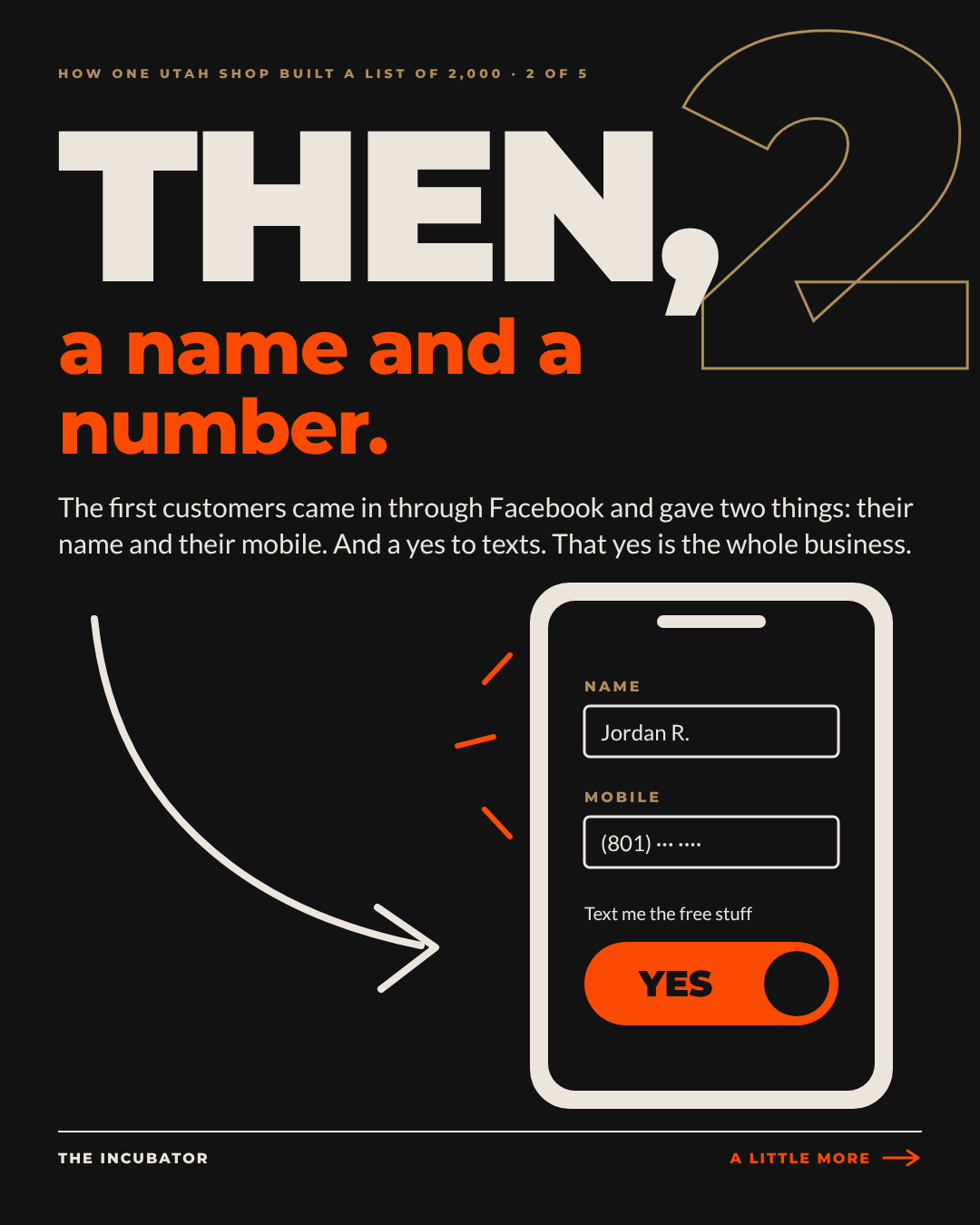
Then, a name and a number turned visitors into a list
To claim the sample, a customer gave two things: their name and their mobile number, and a yes to texts.
That yes is the whole business. An opted-in mobile number is the most valuable thing a local business can own. It is not rented from a platform. It cannot be taken away by an algorithm change. And it is the one channel almost every customer opens within minutes.
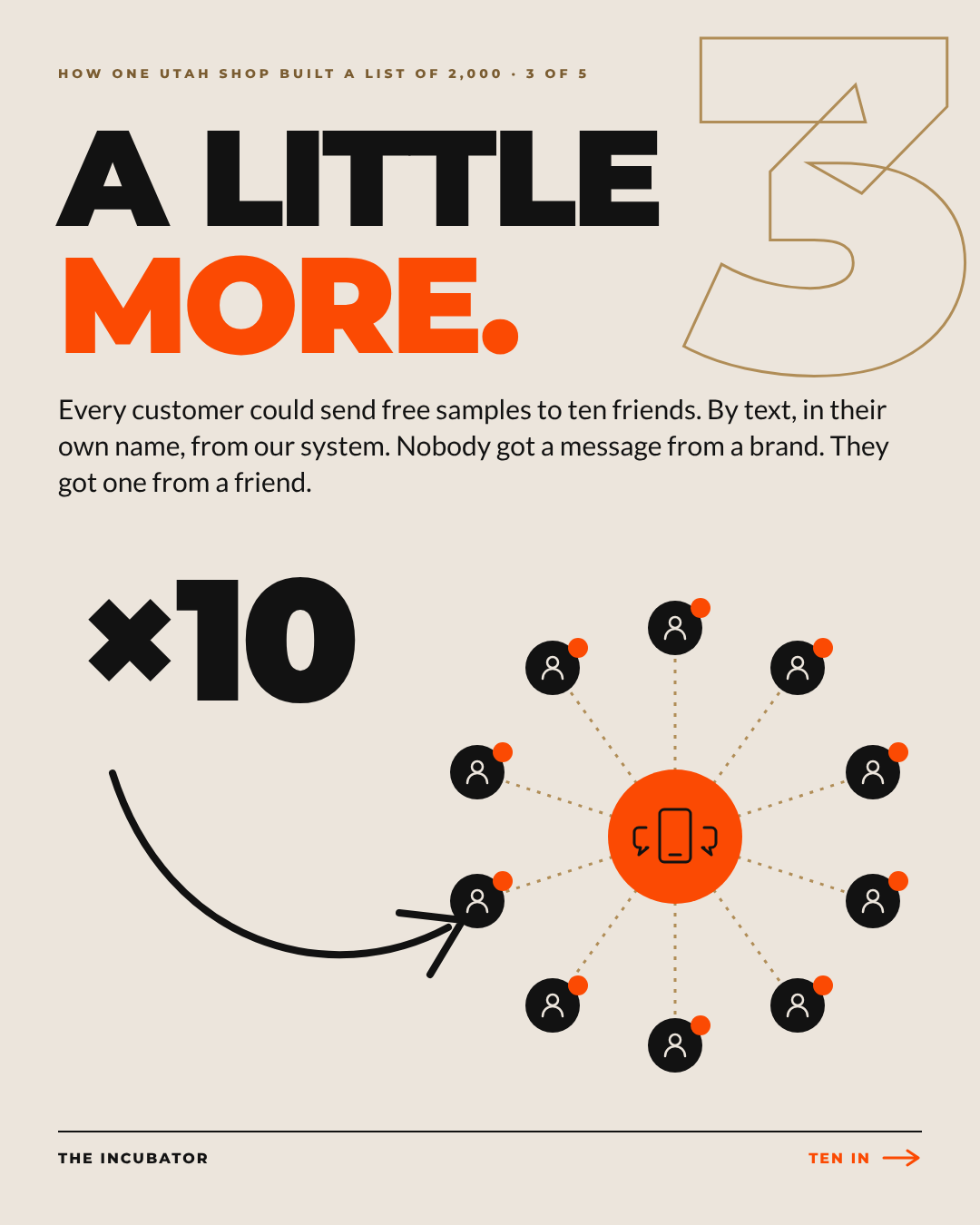
A little more: customers sent free samples to ten friends
Here is the part most referral marketing examples skip.
Every customer who claimed a sample could send free samples to ten friends. The texts went out by name, from the customer, through our system. The friend didn't get a message from a brand. They got one from someone they knew, saying "I got you a free one."
That single design choice is why it worked. Referral programs usually fail because the ask is awkward ("give us your friend's email") or the reward is for the business, not the friend. Here the friend got the gift, the customer got the credit, and the business got a new opted-in number for every friend who claimed.
Sharing is caring. People share things that make them look generous.
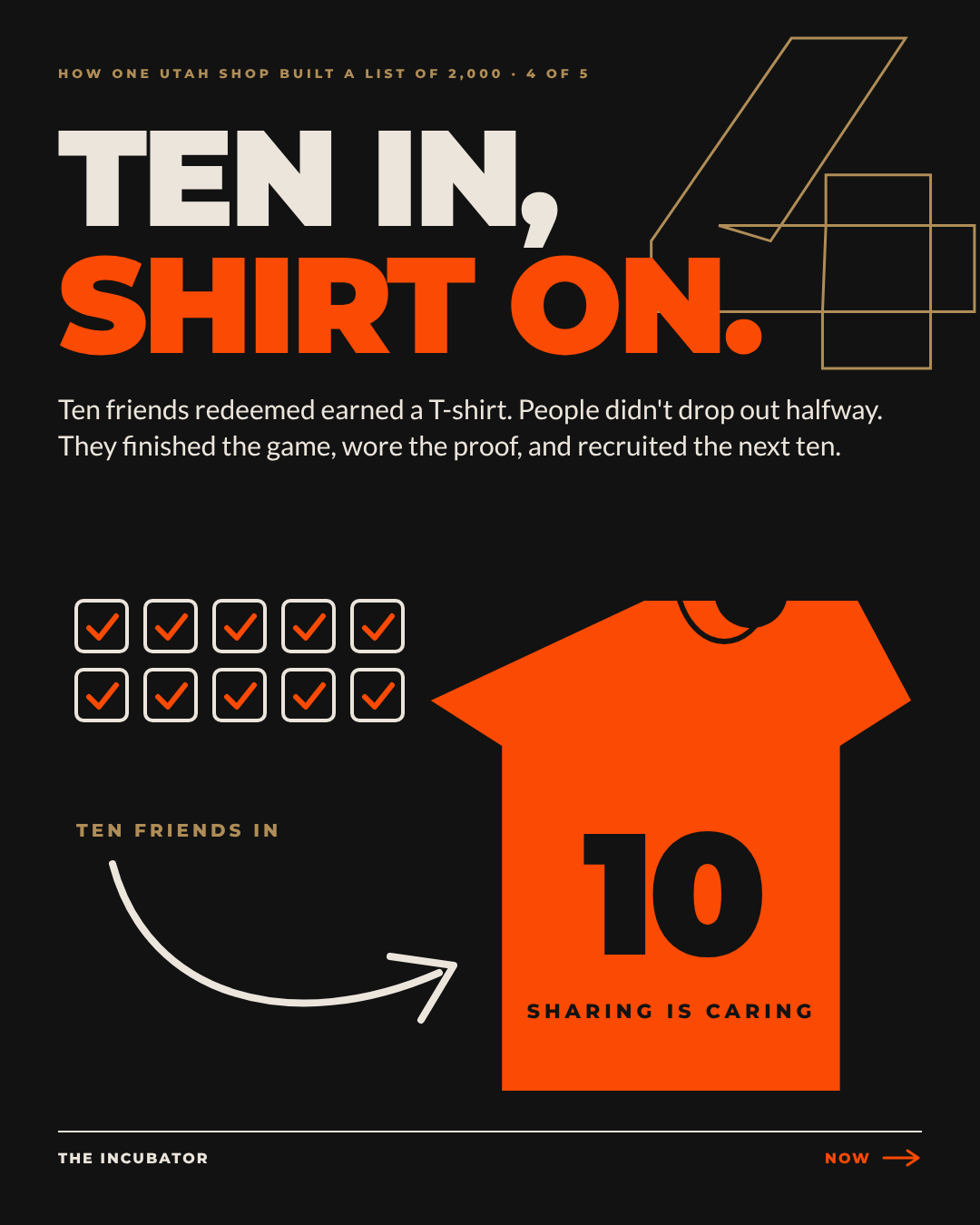
Ten in, shirt on: the reward that made people finish
Ten friends redeemed earned a T-shirt.
A T-shirt is not a big reward. That is the point. It was enough to make the game worth finishing and small enough that nobody felt bribed. People didn't drop out halfway. They finished, wore the shirt, and the shirt recruited the next ten.
The social side ran itself. Customers posted about the free samples and the shirt because it was fun, not because we asked. The location's social accounts lit up without a content calendar.
Now: 2,000 opted-in locals in under 90 days
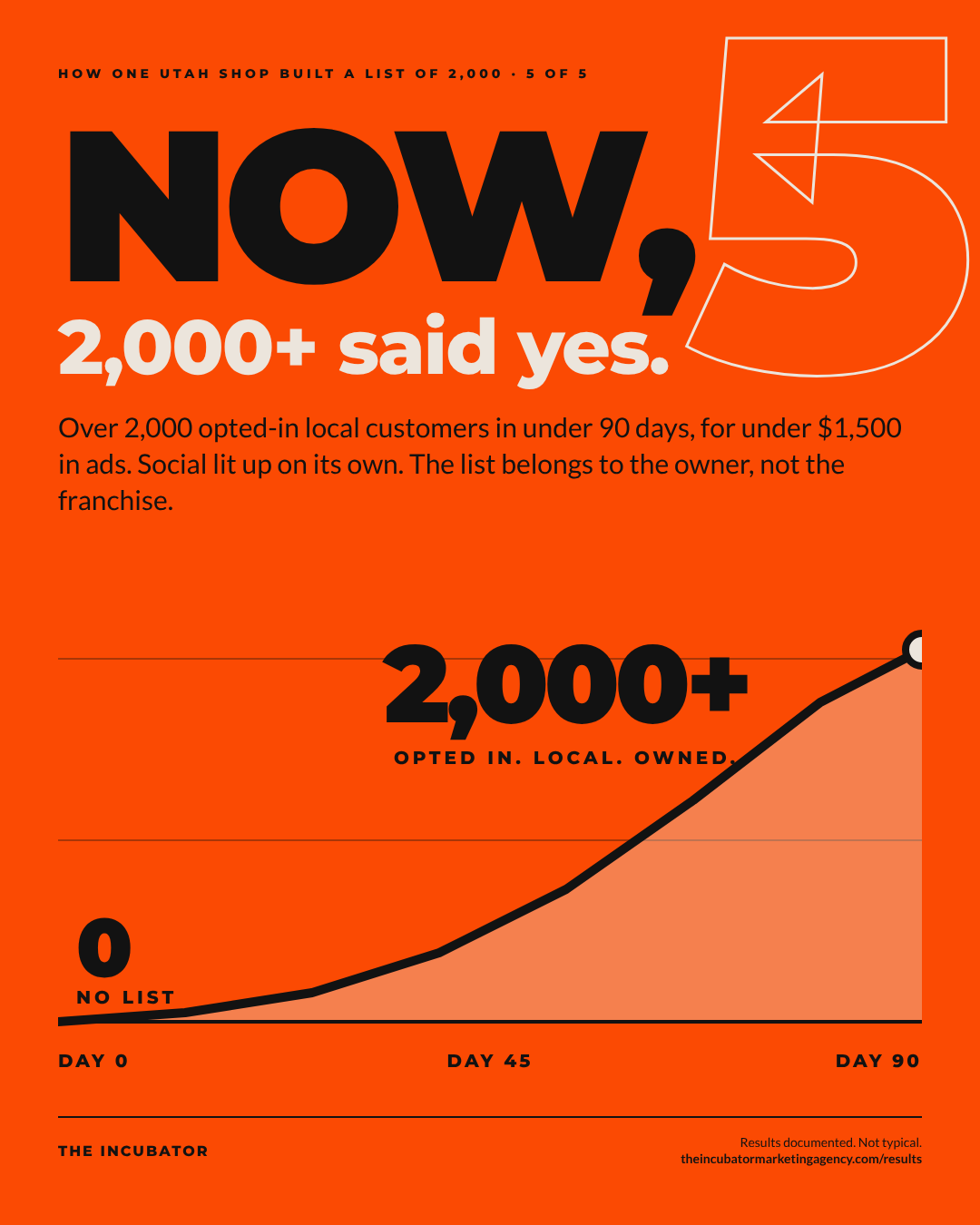
The result: over 2,000 local customers opted in to texts in under 90 days, for under $1,500 in total ad spend and a one-time setup.
The list belongs to the owner, not the franchise. Every future promotion, every slow Tuesday, every new product goes out by text to 2,000 people who already said yes, at a cost of pennies. That is the difference between renting attention and owning it.
What we installed: Facebook lead capture, the text-a-friend referral automation in GoHighLevel, reward tracking, and the creative for the campaign and the social posts.
What this referral marketing example means for your business
You don't need a franchise or a product people can eat. You need three things:
- A free taste. Something small, real and immediate. A free inspection, a free first visit, a free sample, a free 15-minute fix.
- A reason to say yes to texts. The taste is claimed by text, so the number comes with it.
- A gift the customer can give. Let your customer hand the free taste to friends, in their own name. Reward the customer for finishing, not for trying.
A Draper HVAC company could run this with a free filter. A salon could run it with a free blowout. A gym could run it with a free week. The mechanics don't change. The product does.