Teresa McCandless, Trifecta Swag: Why swag is the most underrated marketing channel for local business
Swag turns clients into walking billboards. Here is how Utah businesses build local brand recognition with hats, hoodies, and bottles.
Most local businesses treat promotional products as an afterthought. A pen at a trade show. A keychain in a swag bag nobody opens. That instinct is backwards. Branded merchandise, done right, is one of the highest-return marketing channels a Utah business owner has, and almost nobody is using it on purpose.
Here is the truth. A great hat does not sit in a drawer. It goes on someone's head, walks into a coffee shop, sits in a meeting, and gets seen forty times before it ever wears out. That is marketing you paid for once and collect on for years.

Park City Live Event
Market Faster: The AI Mastermind
An invite-only live experience for Utah founders at the Park City Marriott. Strategy, AI, and the room you've been looking for.
Reserve Your SeatThis article breaks down what we covered on a recent episode of Utah Business Spotlight with Teresa McCandless of Trifecta Swag: which items actually get worn, how to turn merchandise into measurable leads, and why the cheapest option is almost always the most expensive one.
Watch the full episode, Teresa McCandless of Trifecta Swag sits down with Peter Anthony on the Utah Business Spotlight Podcast for a working masterclass on branded merchandise that businesses actually keep.Watch on the podcast page →Why swag beats most digital channels on attention
Run the numbers and the case makes itself. A strong email campaign opens at 38 to 40 percent, which means six in ten people on your list never saw the message. Direct mail does better. Physical merchandise does better still, because the recipient does not have to open anything. They wear it.

The AI Mastermind
02 / 05Stop Guessing. Start Marketing From Truth.
Most businesses market from opinion. The Source of Truth replaces guesswork with a documented, AI-ready strategy.
Think about reach the way you would think about ad impressions. Hand out two hundred quality hats. If each one gets worn even ten extra times because it actually looks good, that is two thousand wearing occasions. Assume twenty to thirty people see the hat each time. You are now looking at roughly forty thousand impressions from a single order, and the logo on that hat never gets scrolled past.
Compare that to a paid social campaign where you rent attention by the click and lose it the second the budget runs dry. Swag is owned attention. You spend once. The impressions compound.

The Business Spotlight
Get Featured On The Business Spotlight
12-minute interview. Cinematic production. Multi-platform distribution. Zero cost to qualified guests.
Contact UsThe items that actually get worn
Not all merchandise earns its keep. The difference between swag that builds your brand and swag that lands in the trash comes down to whether a real person wants to use it. Here are the categories that consistently perform for local businesses.
Functional pieces people keep at home
A direct mail piece with a light-up logo runs a little under a dollar at volume, and it doubles as a flashlight people toss in a drawer or a car. That dual function is the whole point. A flashlight gets used. A flyer gets recycled. When the item is useful, your logo stays in the house instead of the bin.
Water bottles that earn a permanent spot
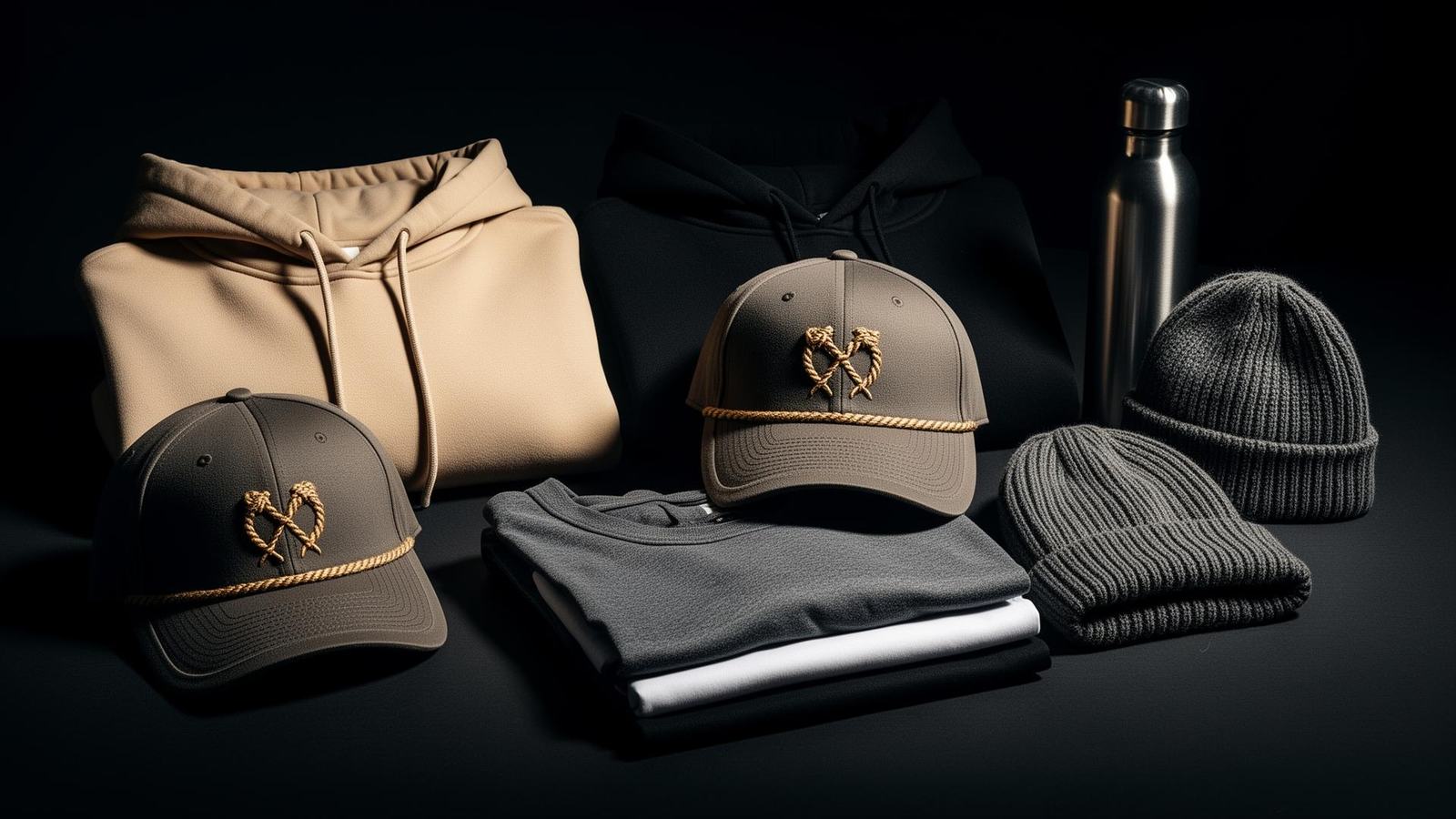
Branded bottles are a category where quality pays for itself. A stainless steel bottle with a pop-off cap, a hanger, and a straw lands around fourteen dollars and becomes the bottle someone actually grabs on the way to the gym. People wash these, display them, and refuse to give them away. That is the goal. You want the item nobody parts with, because that is the item that markets for you every single day.
Hats people request by name
The most requested item right now is a rope-front hat with laser-engraved vent holes in the back. A standard embroidered logo on roughly a dozen hats runs about eighteen dollars each, and the price drops sharply at two or three hundred units. The rule on hats is restraint. A clean logo gets worn. A full company name plastered across the front does not. People wear your brand when it looks good, not when it looks like a billboard they are embarrassed to put on.
Beanies and hoodies for the long winter
A quality cotton-poly beanie runs about six or seven dollars and gets worn all winter, every day, for months. A premium heavyweight hoodie lands in the mid-thirties at volume and becomes the piece people steal from each other. When a multi-millionaire client tells you it is the best hoodie they own and their family keeps taking it, you are not buying merchandise anymore. You are buying loyalty that wears your name in public.
Turn swag into leads, not just impressions
Here is the move almost nobody makes, and it is the one that turns branded merchandise from a brand-awareness play into a lead-generation machine.
Logo on the front. QR code on the back.
Put your logo and your name where people see it, then put a QR code somewhere they can scan it. On a bottle, the back. On a hoodie, the sleeve. On a beanie, the front or the cuff. The code reads "Scan me for free stuff." When someone scans, you capture a contact and send them a small branded item to their home. Now the giveaway did two jobs: it advertised you for free, and it handed you a warm lead with a mailing address.
That changes the entire math of giving things away. Every piece you hand out is no longer a cost. It is a walking connection back to your business, and the scan turns a stranger into a contact you can follow up with.
Cheap is expensive
This is the part business owners do not want to hear, so here it is plainly. Cheap is expensive.
When you buy the lowest-cost item to stretch your budget, you are spending money you will never see again, because nobody wears it. It goes straight in the bin and your logo goes with it. The hats people actually kept were never the cheap ones. The cheap ones got tossed before they were ever worn once.
Spend four or five dollars more per item and the equation flips. The person who loves the hat wears it ten times more often. Those extra wears are the forty thousand impressions from earlier in this article, the ones you only collect if the item is good enough to leave the house. Get the best you can afford, then get the best. Even if you order fewer pieces, the ones that get worn are worth more than a pile of merchandise nobody touches.
Build a package clients remember
One hat is a gift. A coordinated package is a marketing event. The strongest play for client appreciation, holiday gifting, or a high-value thank-you is to bundle three pieces inside a branded canvas bag: a hoodie, a beanie, and a bottle, every piece carrying the "scan me" code, with a handwritten card on top.
A package like that does something a single item cannot. It signals that you respect the relationship enough to do it well, it puts your brand on three different items the recipient already wanted, and it gives you three separate scan points to capture engagement. The bag itself becomes a keeper. People collect them. That is your logo riding along on every grocery run and gym trip for years.
The timing matters too. Quality merchandise typically takes a month to produce once you factor in proofs and revisions, which means waiting until December guarantees you miss the holidays. A trusted local supplier with curated relationships can often turn an order in a couple of weeks. Order early, order well, and build the package before your competitors have even started thinking about it.
Start before your competition does
Swag is not a novelty line item. It is owned attention, lead capture, and client loyalty in one channel, and it is sitting unused on most local marketing budgets right now. The businesses that win with it are the ones who treat it like the strategic asset it is: choose items people actually wear, add a scan point to every piece, refuse to buy cheap, and bundle thoughtfully.
If you want help building a swag strategy that captures leads instead of just handing out logos, that is exactly the kind of work The INCubator does. Reach out, tell us what you are trying to build, and we will help you put your brand on the items your customers will not stop wearing.
Ready to turn your branded merchandise into a lead-generation channel? The INCubator AI Marketing Agency builds the marketing infrastructure Utah businesses use to capture, nurture, and convert.
Peter Anthony
Founder, The INCubator AI Marketing Agency
Helping Utah businesses grow through strategic marketing and authentic storytelling.
Free Live Event
The Founders Series
Five free AI marketing nights in Draper, presented by MindsetMarketing.Academy and powered by the INCubator.
Oct 20 – Dec 15, 2026 · Doors 6:45 PM · Presentation 7:00–8:30 PM · Q&A until 9:00 PM
Register for Free