Jonathan Lo, Salt Foundry: The Only Marketing KPI That Matters How Founders Should Be Tracking Customer Interest
Inside Salt Foundry's playbook for Utah founders. Jonathan Lo on empathy marketing, the value-price-cost framework, jobs-to-be-done, and the customer journey that quietly out-converts every paid funnel.
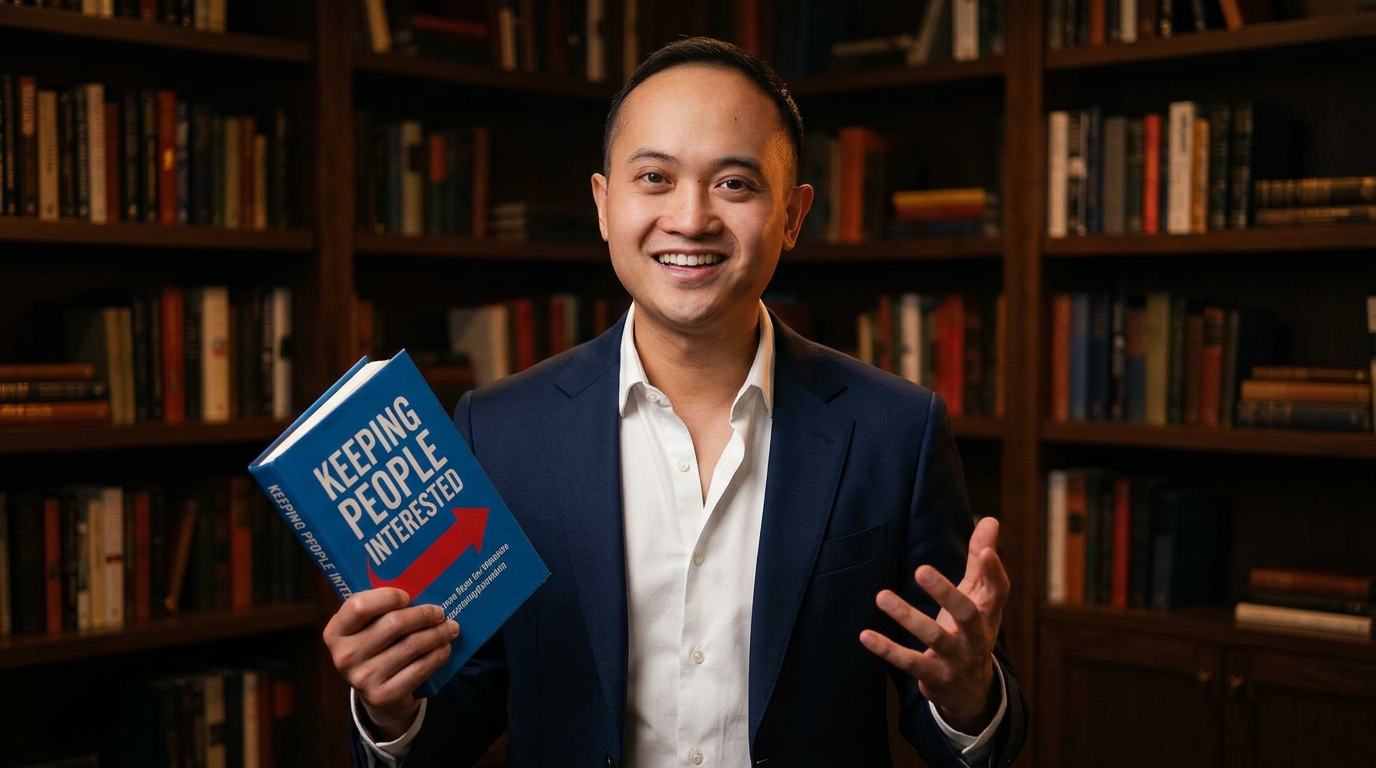
Most Utah founders are tracking the wrong number. They open the dashboard, scroll to the conversion rate, and let one decimal point dictate the next quarter's marketing decisions. Jonathan Lo, CEO of Salt Foundry and author of the new book Keeping People Interested, The Only KPI That Really Matters, sat down with Peter Anthony on the Utah Business Spotlight Podcast to reframe the entire scoreboard. The number that actually matters is whether attention compounds. The only way attention compounds is if the brand is genuinely interested in the customer first.
Jonathan Lo's premise is one sentence, said twice in the episode for emphasis. To keep people interested, you have to be interested in them. That single line collapses most of what Utah operators worry about into a sharper question. Is the brand built around the customer's job to be done, or around the founder's conversion funnel. The two paths look identical on a one-week dashboard. Over a thirty-six month window, they produce radically different companies.

Park City Live Event
Market Faster: The AI Mastermind
An invite-only live experience for Utah founders at the Park City Marriott. Strategy, AI, and the room you've been looking for.
Reserve Your SeatWhy The Conversion Rate Obsession Is Costing Utah Founders Real Growth
Jonathan Lo spent years inside a multi-billion-dollar e-commerce brand where the team obsessed over a 3 percent conversion rate. The math was rational. A one basis point shift in conversion was worth hundreds of thousands of dollars in annual revenue. But that math hides the silent leak. The brand was pouring resources into the 3 percent who already wanted to buy, and ignoring the 97 percent who showed up, scrolled, and quietly disqualified the brand before the first email ever fired.
For a Utah founder running a service business, a clinic, a fitness studio, a SaaS, or a consumer brand, the lesson lands harder. Doubling a 2 percent conversion rate to 4 percent is a celebrated win. But doubling the percentage of qualified visitors who become interested in the brand at all, regardless of whether they buy this month, is the move that builds a pipeline that compounds. Jonathan Lo is not telling Utah operators to abandon the conversion rate. He is telling them to stop letting it be the only number on the wall.

Mindset Marketing Academy
03 / 05Feed Your AI The Right Brain
AI is only as good as what you give it. We build the brain, your brand, voice, audience, and offers, so every tool speaks like you.
The Premise Of Keeping People Interested
The book was almost called Empathy Marketing. Marketers loved the working title. Founders did not. Jonathan Lo did his own customer research, listened to his own advice, and retitled the book around the only outcome a business owner actually cares about, attention that does not have to be re-purchased every week. Keeping People Interested, The Only KPI That Really Matters launched on May 19 and is built on more than 100 references and dozens of stories, but the operating premise sits in one sentence and one math equation.
"To keep people interested, you have to be interested in them."

Market Faster Methodology
The Build · 30-Day Marketing Infrastructure
Brand, website, funnels, automation, CRM, and AI voice receptionist installed in 30 days. Source of Truth included. Only 12 Utah businesses every 6 weeks.
See What's BuiltJonathan Lo argues that brands playing the infinite game, adding value at every stage of the journey instead of selling, selling, selling, end up with sustainable, profitable growth. Brands that flip the order, hunt for the conversion first and treat the customer as a number afterward, end up paying the ad networks more every quarter just to stand still. Utah operators recognize the pattern instantly because most have lived it. Paid traffic gets more expensive. Organic reach gets harder. The only escape is a brand that customers willingly bring other customers to.
The Value, Price, Cost Framework Every Utah Operator Should Be Running
Halfway through the conversation, Jonathan Lo lays out a framework that should sit on every Utah founder's desk. It is called Value, Price, Cost, or VPC. Three numbers. Margin lives between cost and price. That is the math everyone already does. The variable that decides whether the business survives is value, and value is set by marketing and brand, not by the spec sheet.
Jonathan Lo's framing is direct. No customer pays a price unless they believe the value to them is even higher than the price. That perceived value is overwhelmingly emotional. Peter Anthony picks it up with the luxury example. A Louis Vuitton bag is canvas wrapped in plastic with leather sides. The materials are not the value. The story, the identity, and the emotional weight of carrying it are. A watch keeps worse time than the phone in the same pocket. The watch is not telling time. It is telling the world something about the wearer. Brand is what closes the gap between cost and perceived value, and the gap is where the business actually lives.
"A powerful brand means someone will choose you even if your product is inferior to someone else's."
Read that line through the lens of a Utah service business. Two Salt Lake City med spas can offer the same treatment. Two Lehi mortgage brokers can offer the same rate. Two Park City builders can pour the same foundation. The one that wins is the one whose perceived value is higher, and the only lever that moves perceived value is the brand wrapped around the product. That is not a soft idea. That is the entire reason marketing infrastructure exists.
Jobs To Be Done The Question Most Utah Brands Never Ask
Jonathan Lo borrows a frame most Utah operators have never been taught. Customers are constantly hiring and firing products and services. They are not buying the product, they are hiring it to do a job. Jonathan Lo's example lands fast. No one needs a kitchen knife. They need the ability to prepare a healthy meal for their family quickly. Donald Miller frames it the same way in Storybrand. The customer is not hanging a picture, they are getting back to the football game.
For Utah founders, the jobs-to-be-done question reframes the entire marketing brief. A fitness studio in Sandy is not selling workouts. It is hiring out the job of feeling strong, confident, and seen at the next family event. A custom builder in Draper is not selling square footage. It is hiring out the job of giving the family a place that finally feels like the life they worked thirty years to earn. A fractional CMO at Salt Foundry is not selling marketing strategy. Jonathan Lo is hiring out the job of letting the founder stop guessing and trust that the next dollar of marketing spend is going to compound.
Peter Anthony layers an The INCubator AI Marketing Agency frame directly on top of the jobs-to-be-done idea. Customer alignment happens when the customer believes that you believe what they believe. That belief is only possible when the brand is visibly interested in the customer's actual job first. The brands that lead with the product never get the chance to align. The brands that lead with the customer's job get the trust, then get the sale, then get the referral.
The Five Stage Customer Journey And The Job To Be Done At Each Transition
The center of Jonathan Lo's book is a five-stage journey framework, and unlike most funnel diagrams that just label the stages, Jonathan Lo specifies the job the brand has to do at every transition. This is the part Utah founders should screenshot and pin above the monitor.
- Unawareness to awareness, the core need is inspiration, and the job is to capture attention.
- Awareness to consideration, the core need is confidence, and the job is to build trust.
- Consideration to purchase, the core need is ease, and the job is to drive action.
- Purchase to repeat, the core need is satisfaction, and the job is to create delight.
- Repeat to advocate, the core need is purpose, and the job is to spark evangelism.
Each chapter of Keeping People Interested unpacks one of those transitions. The discipline Jonathan Lo is teaching is that a brand cannot run the same play across all five stages. Inspiration is not the same lever as confidence. Confidence is not the same lever as ease. Most Utah businesses run one play, usually the conversion play, at every stage, and then wonder why awareness traffic does not convert and why repeat customers do not become advocates. The journey is not linear, but the jobs are sequential.
The Engineering Mind Behind The Marketing Playbook
Jonathan Lo did not start in marketing. He came up through electrical engineering at the University of Illinois. Near the end of college, Jonathan Lo got compelled by global poverty issues, discovered World Vision, and took a fellowship at the nonprofit's US headquarters on a 1,000 dollar a month stipend. That single decision, choosing a fellowship over a corporate engineering salary that paid roughly four times as much in three months, is the origin of the empathy-first marketing methodology Jonathan Lo now teaches Utah founders.
Inside World Vision, Jonathan Lo accidentally became a marketer. He helped grow the nonprofit's Facebook audience past one million followers, when a million Facebook followers actually meant something. He launched the first mobile-optimized site and increased mobile acquisitions by 50 percent. He went on to manage a multi-million-dollar paid media program. The feedback loop on a one-million-follower page is brutal and fast. Post drops, and if a few hundred people have not interacted inside the first few seconds, something is wrong with the message. Jonathan Lo describes that environment as the place he learned organic marketing in real time.
The nonprofit chapter also gave Jonathan Lo a lesson that translates directly into Utah B2B and consumer marketing. A donor does not get a physical product. The donor is purchasing a feeling and the promise of impact. If you can sell nothing to somebody, Jonathan Lo says, you can sell anything to anybody. That is the bar. Most Utah brands are selling a physical product or a tangible service and still cannot articulate the feeling underneath. The nonprofit operator is forced to lead with the feeling on day one.
Why Brand Beats Product, Every Time
The conversation returns to the brand question Utah operators most often dismiss. Jonathan Lo cites the TikTok leather worker who has gone viral for cutting apart Louis Vuitton, Hermes, and other luxury goods and grading the actual craftsmanship. The conclusion is the same in every video. The materials are not worth the price. Sometimes the craftsmanship is not even worth the price. What the customer is buying is what the product makes them feel.
Jonathan Lo's verdict is direct. Humans are not robots. The psychological elements of how a product makes someone feel absolutely matter, and that is the power of brand. Utah founders who treat brand as a logo, a color palette, and a tagline are missing the entire point. Brand is the emotional contract a customer signs before the wallet ever comes out. The contract gets honored every time the product is used. The contract gets broken every time the experience falls short of the promise. The brands that compound are the ones that never break the contract.
The Stat Every Utah Founder Should Sit With
Peter Anthony delivers the stat near the end of the episode. Eighty-five percent of salespeople have never read a sales book. Eighty-five percent of business owners have never read a marketing book. Eighty percent of what a business owner does, day to day, is marketing. The math is uncomfortable. Most Utah founders are spending most of their time on the discipline they have invested the least in learning.
Jonathan Lo's closing argument is the inverse case. If a Utah founder can capture interest, sales solves the rest. If sales is working, the operational issues, the hiring issues, the product quality issues all become solvable. If sales is broken, no amount of operational excellence saves the business. Interest is the upstream variable. Everything downstream gets easier when the brand is winning attention on purpose.
Find Jonathan Lo and Salt Foundry
Jonathan Lo runs Salt Foundry, a Utah fractional CMO practice serving founders and growth-stage CEOs. The book Keeping People Interested, The Only KPI That Really Matters, is available on Amazon in paperback and Kindle. Connect with Jonathan Lo directly on LinkedIn, where he responds to every Utah-based message.
Visit saltfoundrystrategy.com → →What Utah Operators Should Take Away From Jonathan Lo's Playbook
- The only KPI that compounds is whether customers stay interested, and the only way to keep them interested is to be interested in them first.
- Stop running the conversion play at every stage of the journey. Different transitions require inspiration, confidence, ease, satisfaction, and purpose, in that order.
- Use the Value, Price, Cost framework. Margin lives between cost and price. Brand is the only lever that raises perceived value above price.
- Frame the offer around the customer's job to be done, the outcome, not the product. Customers hire products to do jobs and fire products that fail the job.
- Find your lane. Jonathan Lo built Salt Foundry around LinkedIn on purpose. Trying to be everywhere is how most Utah brands disappear from every channel.
- Read the marketing book. Eighty percent of the founder's job is marketing. The other eighty-five percent of founders have never picked up the book.
Frequently Asked Questions
Who is Jonathan Lo?
Jonathan Lo is the CEO of Salt Foundry, a Utah fractional CMO practice, and the author of Keeping People Interested, The Only KPI That Really Matters. Jonathan Lo holds an electrical engineering degree from the University of Illinois and built his marketing career at World Vision before moving into for-profit and e-commerce growth leadership, then founding Salt Foundry.
What is Salt Foundry?
Salt Foundry is Jonathan Lo's Utah-based fractional CMO firm. Salt Foundry serves founders, owners, and growth-stage CEOs as an embedded marketing leader, building positioning, messaging, customer journey strategy, and full-funnel marketing systems across B2B and consumer brands. Find Salt Foundry at saltfoundrystrategy.com.
What is the book Keeping People Interested about?
Keeping People Interested, The Only KPI That Really Matters is Jonathan Lo's book on empathy marketing, the value-price-cost framework, and a five-stage customer journey that maps the specific job to be done at every transition from unawareness to advocate. The book is written for founders and CEOs, not just marketers, and is available in paperback and Kindle on Amazon.
What is the jobs-to-be-done framework Jonathan Lo teaches?
Jobs-to-be-done is the idea that customers do not buy products, they hire products to do a job. No one needs a kitchen knife, they need the ability to prepare a healthy meal for the family quickly. Jonathan Lo uses jobs-to-be-done to reframe Utah brand strategy around the customer's actual outcome instead of the product's features.
What is the value-price-cost framework?
Value, Price, Cost or VPC is Jonathan Lo's framework for understanding why customers buy. Cost is what the brand pays to produce. Price is what the customer pays. Value is what the customer perceives. Margin lives between cost and price, but only marketing and brand raise perceived value above price. If perceived value collapses, no price holds.
Where can Utah founders connect with Jonathan Lo?
Jonathan Lo is most active on LinkedIn, where he personally responds to every Utah-based message and is often open to a coffee. You can also find Jonathan Lo at saltfoundrystrategy.com for Salt Foundry and at jonathankalo.com for the book, strategic frameworks, decision tools, and mental models.
Want this kind of customer journey clarity for your Utah business? The INCubator AI Marketing Agency builds the marketing infrastructure, positioning, content, video, automation, and AI, that turns Utah founders into the obvious choice in their market.
Peter Anthony
Founder, The INCubator AI Marketing Agency
Helping Utah businesses grow through strategic marketing and authentic storytelling.
Free Live Event
The Founders Series
Five free AI marketing nights in Draper, presented by MindsetMarketing.Academy and powered by the INCubator.
Oct 20 – Dec 15, 2026 · Doors 6:45 PM · Presentation 7:00–8:30 PM · Q&A until 9:00 PM
Register for Free