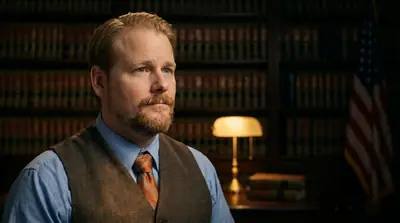
Wes Israelson, Main Street Office Furniture: Office Chairs Are Internal Marketing | How $99 Chairs Are Costing Employers Consistant Productivity
Wes Israelson, founder of Main Street Office Furniture, joins Peter Anthony to expose the workspace math most Utah operators ignore, why cheap chairs, bad acoustics, and untrained ergonomics quietly cost a 10-person team the equivalent of one full-time salary every year.
Most Utah operators treat office furniture as decoration. The ones who scale treat it as operational infrastructure. On the latest Utah Business Spotlight Podcast, Peter Anthony sat down with Wes Israelson, founder of Main Street Office Furniture, to walk through the workspace math that quietly decides whether a 5-50 person Utah team produces seven hours a day or four, and why the gap between those two numbers is the equivalent of one full-time salary per year, every year, that the operator is still paying for and getting nothing from. This is the long-form companion to that conversation, engineered for the Utah founder who has been told the chair is cosmetic and is finally ready to run the actual numbers.
I am Peter Anthony, founder of The INCubator AI Marketing Agency. Wes Israelson is the founder of Main Street Office Furniture, a Salt Lake City-based commercial furniture provider with an in-house moving company that has spent years executing a single operating thesis: when employees love where they work, they produce structurally better. Main Street Office Furniture serves the institutional commercial channel, outfitting Utah offices in the 5 to 50-employee, 2,000 to 10,000 square-foot category with ergonomic seating, height-adjustable desks, acoustic treatments, collaborative meeting spaces, and intentional workspace flow engineered to drive measurable productivity, employee retention, and daily performance. Wes Israelson and Main Street Office Furniture represent the major commercial brands every Fortune 500 buys, Steelcase, Steelcase Leap, Herman Miller, Teknion, Knoll, sit-stand chairs, through both a new-furniture channel and a sustainable used-furniture channel that delivers name-brand quality at half the cost or less for bootstrapped Utah operators.

Voice AI Receptionist
Never Miss Another Lead Again
AI-powered virtual receptionist that answers, qualifies, and books, 24/7, in your brand voice.
See How It WorksThe Marketing Hierarchy Most Founders Skip, Yourself, Your Team, Your Vendors
Peter Anthony reframed Wes Israelson's work as marketing infrastructure, not interior design. The first person any founder markets to is themselves, the operator has to believe they can do it. The second is the team, the CEO has to maintain the vision, and the vision becomes real in the environment the team walks into every morning. The third is the vendor and visitor channel, anyone who walks into an engaged, happy workspace is structurally more likely to talk about it because that energy has become rare in the modern Utah corporate market. Wes Israelson and Main Street Office Furniture are selling all three at once: belief, vision, and word-of-mouth amplification, delivered through ergonomic chairs, acoustic treatments, and intentional layout.
Wes Israelson named the operator gap most founders never close. Owners assume their team knows what the owner knows about how to use a workspace. They don't. Employees are onboarded with a computer and a desk and never taught how to actually sit, how to use a height-adjustable desk, where to take collaborative calls so acoustics support focus instead of degrading it, or how to use the meeting space as a collaboration tool instead of a passive room. Main Street Office Furniture's framing on camera: a blank canvas is an opportunity to paint the dream, but only if the team is taught how to use the brush. Without that teaching, every dollar spent on the workspace is half-wasted.
Mindset Marketing Academy
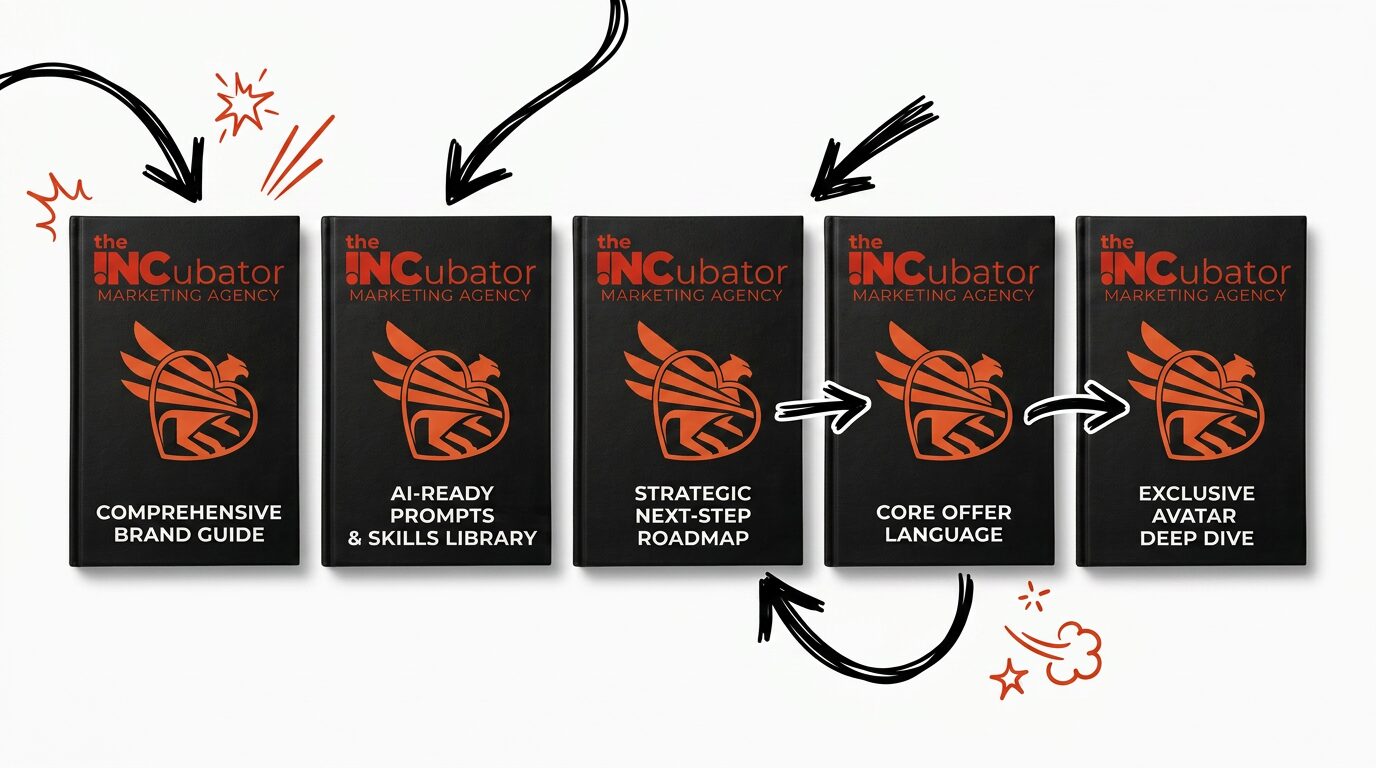
04 / 05Walk Out With The Whole System
Messaging, ideal client profiles, offer architecture, content engine, and prompts, delivered as one living document.
The $99 Chair Tax, What Cheap Seating Actually Costs Utah Operators
Peter Anthony delivered the financial framing live on camera. Most owners go to Costco, buy $99 chairs, and wonder why their team is unproductive by hour two. The owner is asking for ten productive hours, paying for seven and a half, and structurally compacting the spinal discs of every employee for the entire shift. By hour two the team is too uncomfortable to engage with clients with energy. The cheap chair is not cheap, it is a daily tax on every interaction the business is paying for, every call the team makes, every email they write, and every meeting they sit through. Wes Israelson and Main Street Office Furniture exist to remove that tax.
Wes Israelson delivered the line that should reframe every Utah founder's furniture budget: most people spend $3,000 to $6,000 on a mattress they sleep on for six hours a night, and then sit their entire team for ten hours a day on a $100 chair. The math is structurally inverted. The chair is not an aesthetic line item, it is a daily-use medical device that determines whether the team is engaged or in physical pain by hour two. Wes Israelson's instruction to operators: spend money on where your employees sit. Every hour on a bad chair is an hour the operator is paying for and not getting back.
The Business Spotlight
Get Featured On The Business Spotlight
12-minute interview. Cinematic production. Multi-platform distribution. Zero cost to qualified guests.
Contact Us"Cheap chairs aren't cheap. They're a tax on retention, focus, and every hour your team spends at a desk.", Wes Israelson, Main Street Office Furniture
The Four-Hour Productivity Collapse, The Math Every Utah Operator Should Run
Wes Israelson ran the operational math on camera. When the chair fails, the desk is wrong, the shoulders haul, or the acoustics break focus, employees stop producing. They start talking to neighbors, get up for walks around the building, and lose the deep-work state. Productivity drops from seven hours per day to four. Peter Anthony extended the math live: three hours per day, per employee, across ten staff members, equals roughly 1,800 hours per year, the equivalent of one full-time employee, possibly two, that the operator is still paying for and getting nothing from. Net-net loss across salary, benefits, and lost output. For a 10-person Utah company that is the most expensive line item in the P&L the operator has never seen on a P&L.
Acoustics, The Most Overlooked Variable In Modern Workspace Design
Peter Anthony named the variable most operators completely overlook: acoustics. People do not feel safe when they hear an echo. People will not have vulnerable, candid conversations when they can hear other people's conversations. Wes Israelson confirmed it with the post-Covid data, most home offices were quieter than the office team members were asked to return to, creating a 15-20% productivity deficit driven entirely by noise. And when an employee needs to take a private call about a child or a doctor's appointment, the workspace had better have a pod or a private room. If it doesn't, the employee will leave for one that does. Main Street Office Furniture's acoustic design work is one of the highest-ROI line items in any Utah office build-out, and it is almost never the line item the founder asks about.
Wes Israelson surfaced the post-Covid operator math. Teams operating fully on Zoom lose roughly 30% of actual innovation because in-person collaboration cannot be replicated through a screen. The operator opportunity is not to mandate return-to-office, it is to design a workspace teams actually want to come back to. When the space is collaborative, quiet, acoustically tuned, and engineered for connection, the team opens up, gets real, and innovation happens. Without that intentional design, in-person becomes worse than remote, and the operator loses both. Main Street Office Furniture's institutional advantage is that the team designs for that outcome by default, not as an upgrade.
The reframe in one line, Productivity isn't motivation. It's how people sit, move, hear, and collaborate every day. Fix the workspace, and the rest of the operating math takes care of itself.See the full Spotlight episode → →Stewardship, The Founder's Obligation To The People In The Building
Peter Anthony shared the faith framing that anchored his salon chain. Forty years ago, with the faith of a mustard seed and a moment of surrender on his knees, Peter Anthony committed to taking care of the team members entrusted to his stewardship as a founder. The operator framing: being an entrepreneur is a blessing and an obligation. The people in the building are not labor, they are the people the founder has been gifted to mentor, nurture, and protect. Wes Israelson built Main Street Office Furniture around the same belief, and the workspace is the physical expression of that stewardship. Wes Israelson's operating principle, built with his wife: how you treat your spouse and your children is generally how you treat your employees. The workspace is the public artifact of that private commitment.
Retention Is The Asset, The Math Behind Nurturing Your Utah Team
Peter Anthony named retention as the single most important operational asset for any service-based business. The most well-known coffee company in the world loses more money to retention failure than any other line item, and they have a great environment to work in. In the Utah salon industry, retention is everything because every stylist who leaves takes a book of business with them. Peter Anthony's salon chain scaled to nearly 300 employees because retention was the operating goal, and a group of those original team members are still working together 35 years later. Wes Israelson reinforced the data on camera: the average employee tenure for a 5 to 50-person Utah company today is 2.5 to 4 years. The operator who beats that average wins the next decade.
Main Street Office Furniture's ideal client is the operator who can move tenure from 2.5 years to 5 or 10, measured by whether the workspace itself contributes to that outcome. The Main Street Office Furniture avatar is structurally specific: 5 to 50-employee Utah companies in 2,000 to 10,000 square-foot offices, founders who walk through the workspace and follow the flow Wes Israelson has designed, and operators who actively engage with their team in the meeting spaces built for that engagement. Founders who treat the team as family are already ideal customers, because they care about the outcome the workspace is engineered to deliver.
The AI Question, How Wes Israelson And Main Street Office Furniture Are Adapting
Peter Anthony pivoted to AI through the lens of his daughter, who is heading to design school and worried about AI's impact on the design industry. Wes Israelson's framing on camera: AI is going to find you whether you want it or not. The point is not to fear it, the point is to adapt today. Main Street Office Furniture is already integrating AI into project management, customer service, and field operations to lift customer satisfaction and free the team to do the higher-value relational work AI cannot do. The future workspace itself will include height-adjustable desks and chairs that auto-fit the user via AI, and the operators who lean in now win the next decade.
Peter Anthony delivered the framing that should anchor every Utah operator's AI strategy: if you are afraid AI will replace you, the right question is what are you doing to make yourself irreplaceable. AI delivers the foundation. The human personalizes it. Michael Jordan does not fear a new basketball or a new court surface, he asks what it does for him so he can go to the next level. The operator imperative: become the Jordan of your industry so AI is a multiplier, not a threat. The fear comes from not putting in the time. Eliminate the gap, and the fear disappears. Wes Israelson and Main Street Office Furniture are running that play in the commercial furniture vertical right now.
Where To Find Main Street Office Furniture In Salt Lake City
Wes Israelson and Main Street Office Furniture are currently located at 3965 South State Street in Salt Lake City. Two months from filming, Main Street Office Furniture is moving to a new headquarters at 3624 Main in Salt Lake City. Both locations carry the full new-furniture lineup, Steelcase, Steelcase Leap, Herman Miller, Teknion, Knoll, sit-stand chairs, and the rest of the category leaders most operators have heard of, alongside Main Street Office Furniture's sustainable used furniture division, which is the operator-grade move for any Utah founder bootstrapping their first office. Same name brands. Half the cost or less. Same productivity math.
The Close, Twenty Chairs, $900 A Month, And One Full Salary Saved
Peter Anthony closed the episode with the operator math that should end the conversation for any Utah founder still on the fence. Twenty staff members at $1,000 per chair is $20,000. Financed over 24 months that is roughly $900 per month, peanuts in operator terms. The ROI is immediate: engaged team, lower turnover, structural productivity lift, and a workspace that does the marketing for itself every time a vendor or recruit walks through the door. Peter Anthony's instruction is direct: stop spending money on Facebook ads that aren't working anyway, and put the capital into the chair, the desk, the acoustics, and the layout that compound for the next decade. Work with The INCubator AI Marketing Agency for organic social. Work with Wes Israelson and Main Street Office Furniture for the environment.
What Utah Founders Should Take Away From This Episode
- Office furniture is operational infrastructure, not decoration. Treat the workspace as a profit lever, because the math says it is one.
- Your team doesn't know what you know. Onboard them on how to use the chair, the desk, the meeting space, and the acoustics, or the investment is half-wasted.
- The $99 chair is a daily tax on engagement, focus, and client interactions. By hour two, the team is too uncomfortable to deliver the energy the operator is paying for.
- Bad ergonomics costs roughly three productive hours per employee per day. Across a 10-person team that is 1,800 hours per year, the equivalent of one full-time salary disappearing.
- Acoustics is the most overlooked variable in modern workspace design. People will not have candid conversations when they can hear other people's conversations.
- Post-Covid, in-person workspaces are 15-20% noisier than the home offices employees got used to. Without acoustic design, return-to-office becomes a productivity downgrade.
- Retention is the single highest-ROI operational metric. Move the average tenure from 2.5 years to 5 or 10, and the company compounds.
- AI is going to find every operator whether they want it or not. Adapt now, use AI to free the team to do the relational work AI cannot do.
- Become the Jordan of your industry. Fear of AI is a symptom of insufficient investment in your own craft. Close the gap, and the fear disappears.
- Twenty ergonomic chairs at $900/month financed is the highest-ROI marketing spend most Utah founders are not making. Cut the Facebook ads. Buy the chairs.
Frequently Asked Questions
Who is Wes Israelson?
Wes Israelson is the founder of Main Street Office Furniture, a Salt Lake City-based commercial furniture provider with an in-house moving company that helps Utah employers design workspaces engineered to drive employee engagement, productivity, and retention. Wes Israelson works with founders, operators, and growing teams to translate workspace design into measurable business outcomes, connecting chair quality, acoustics, ergonomics, and movement patterns to engagement and burnout math. Under Wes Israelson's leadership, Main Street Office Furniture has become known for stewardship-minded service, sustainable used-furniture options, and a long-view operating philosophy that treats every workstation as a profit lever.
What does Main Street Office Furniture actually do?
Main Street Office Furniture is a commercial furniture provider with an in-house moving company that outfits Utah offices in the 5 to 50-employee, 2,000 to 10,000 square-foot category with ergonomic seating, height-adjustable desks, acoustic treatments, collaborative meeting spaces, and intentional workspace flow. Main Street Office Furniture represents the major commercial brands the Fortune 500 buys, Steelcase, Steelcase Leap, Herman Miller, Teknion, Knoll, and sit-stand chairs, through both a new-furniture channel and a sustainable used-furniture division that delivers name-brand quality at half the cost or less for bootstrapped Utah operators.
Why does Wes Israelson say cheap office chairs cost more than expensive ones?
Wes Israelson surfaces the structural math on camera: most operators spend $3,000-$6,000 on a mattress they sleep on for six hours a night, and then sit their entire team for ten hours a day on a $100 chair. The cheap chair compacts spinal discs, causes employees to lose focus by hour two, and drops daily productivity from seven hours to roughly four. Across a 10-person Utah team that is approximately 1,800 lost hours per year, the equivalent of one full-time salary the operator is still paying for and getting nothing from. The cheap chair is the most expensive line item in the P&L the operator has never seen on a P&L.
Why are acoustics so important in Utah office design after Covid?
Wes Israelson and Peter Anthony surface the post-Covid acoustics math directly. Most home offices employees got used to during Covid were structurally quieter than the office they were asked to return to, creating a 15-20% productivity deficit driven entirely by noise. People will not have vulnerable, candid, or focused conversations when they can hear other people's conversations. Without phone pods or private rooms, employees who need to take private calls (about children, doctors, family) will simply leave for an employer whose workspace supports them. Acoustic design is one of the highest-ROI line items in any Utah office build-out, and it is almost never the line item the founder asks about first.
What kind of Utah business is the ideal Main Street Office Furniture client?
Wes Israelson defines the Main Street Office Furniture ideal client structurally: 5 to 50-employee Utah companies operating in 2,000 to 10,000 square-foot offices, owners who walk through the workspace and follow the flow Main Street Office Furniture has designed, and operators who actively engage with their team in the meeting spaces built for collaboration. Founders who treat their team as family, and who care about moving the average employee tenure from 2.5 years to 5 or 10, are structurally aligned with Main Street Office Furniture's operating thesis: when employees love where they work, they produce better, stay longer, and compound the company's growth.
How does The INCubator AI Marketing Agency complement Main Street Office Furniture's work?
Main Street Office Furniture builds the physical infrastructure that retains the team and lifts daily productivity. The INCubator AI Marketing Agency builds the marketing infrastructure that fills the seats Main Street Office Furniture installs, websites, AI-integrated content engines, video, organic social, the customer-avatar work taught every Wednesday evening in Sandy, Utah, and the email/SMS audience-ownership systems that survive every platform shift. Peter Anthony and Wes Israelson operate in adjacent lanes: Wes Israelson aligns the workspace that retains the team. The INCubator AI Marketing Agency aligns the audience-capture engine that grows the company occupying the workspace.
Ready to build the marketing infrastructure that fills the seats Wes Israelson installs? The INCubator AI Marketing Agency builds the websites, content engines, and AI-integrated systems Utah operators use to compound growth without burning capital on Facebook ads that aren't working anyway.
Peter Anthony
Founder, The INCubator AI Marketing Agency
Helping Utah businesses grow through strategic marketing and authentic storytelling.
Free Live Event
The Founders Series
Five free AI marketing nights in Draper, presented by MindsetMarketing.Academy and powered by the INCubator.
Oct 20 – Dec 15, 2026 · Doors 6:45 PM · Presentation 7:00–8:30 PM · Q&A until 9:00 PM
Register for Free